

Can you jump rope on a yoga mat? For an occasional, low-volume session, the answer may be yes. But yoga mats and jump rope mats are designed for very different types of movement.
A yoga mat is primarily built for stretching, floor exercises, and controlled poses. A jump rope mat must handle repeated landings, fast footwork, and constant contact from the rope cable. If jump rope is a regular part of your training, choosing the right surface can improve stability, protect your equipment, and create a more consistent training space.
The Short Answer
A firm yoga mat may work temporarily for basic jumps. However, it may feel too soft, move under your feet, or create too much friction for the rope cable.
A purpose-built jump rope mat is the better long-term choice for regular skipping, boxing footwork, speed work, double unders, crossovers, and weighted rope training.
Jump Rope Mat vs. Yoga Mat
| Feature | Yoga Mat | Jump Rope Mat |
|---|---|---|
| Primary purpose | Yoga, stretching, and floor exercises | Skipping, repeated rope contact, and footwork |
| Surface | Often soft or highly grippy | Firm and designed for smoother rope contact |
| Movement space | Usually narrow | Available in sizes suited to basic jumps or wider footwork |
| Durability | May wear or tear under repeated cable strikes | Built to handle regular rope training |
| Stability | May stretch, bunch, or compress | Designed to remain flat and stable |
| Floor and noise control | Provides a basic layer | Designed to protect flooring and dampen rope-to-floor contact |
Why a Yoga Mat May Not Be Ideal for Jump Rope
1. The Surface Can Catch the Rope
Many yoga mats are designed to create strong grip for hands and feet. That tacky texture can interfere with the rope cable, change its bounce, and disrupt your rhythm. A jump rope mat should provide grip under your shoes while still allowing the cable to move consistently across the surface.
2. Soft Mats Can Affect Stability
More cushioning is not always better. If a mat compresses too much under your feet, quick transitions and lateral movements may feel unstable. Jump rope training generally works best on a firm surface with controlled cushioning rather than a deeply padded surface.
3. Yoga Mats Can Wear Faster
A rope repeatedly strikes the same section of the mat during every session. Yoga mats are not always designed for this type of repeated contact, especially when speed ropes or weighted ropes are used. Over time, the surface may begin to mark, peel, or tear.
4. The Training Area May Be Too Narrow
Basic bounce steps require limited space, but boxer steps, side swings, crossovers, and lateral footwork require more room. A wider or longer jump rope mat creates a defined training zone and gives the rope more surface coverage.
When Can You Use a Yoga Mat for Jump Rope?
A yoga mat may be acceptable for short, occasional sessions if it:
- Lies completely flat without curling or bunching
- Feels firm and stable under your feet
- Does not catch or slow down the rope cable
- Provides enough room for your jumping style
- Shows no signs of tearing or surface damage
Stop using it if the mat begins to move, fold, or interfere with the rope. Regular athletes will generally benefit from a dedicated jump rope training surface.
What Should You Look for in a Jump Rope Mat?
- Firm cushioning: Enough material to separate you from a hard floor without creating an unstable surface.
- Rope-friendly texture: Smooth enough for consistent cable contact but grippy enough for controlled footwork.
- Non-slip base: The mat should remain in place during boxer steps and direction changes.
- Appropriate size: Choose a compact area for basic jumps or a larger surface for freestyle and boxing movement.
- Durable construction: It should withstand repeated contact from PVC, beaded, and weighted ropes.
- Easy maintenance: Sweat and dust should be easy to remove after training.
Choosing Between Standard and Jumbo Size
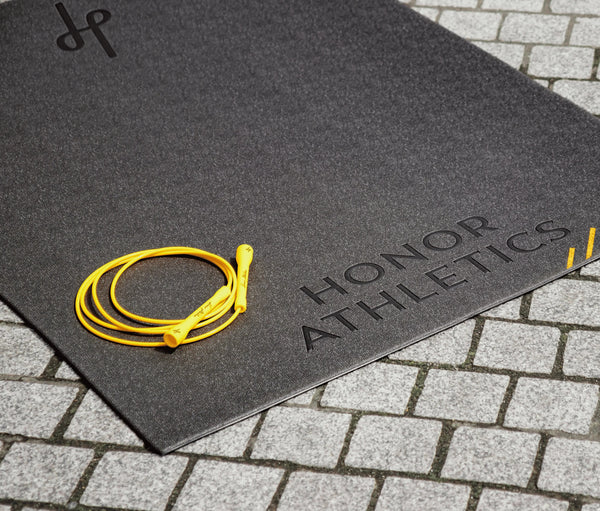
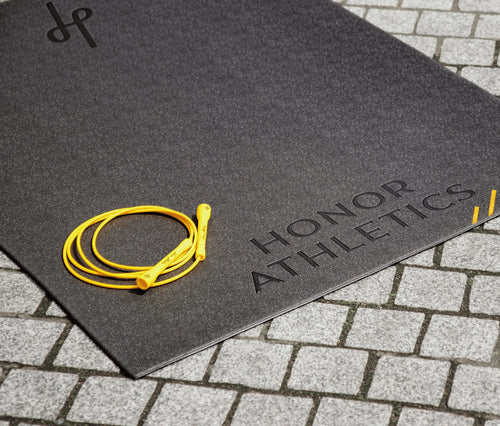
The Honor Athletics Premium Jump Rope Mat uses 1/4-inch (6.35 mm) high-density rubber with a textured, non-slip surface and reinforced centre.
- Standard – 36 × 48 inches (approximately 91 × 122 cm): Suitable for compact home gyms, basic bounce training, and athletes who want a smaller training area.
- Jumbo – 43.5 × 86.5 inches (approximately 110 × 220 cm): Provides additional coverage for boxing footwork, crossovers, weighted ropes, and athletes who move more during each round.
Whichever size you choose, leave sufficient clearance around and above the mat before beginning your workout.
How to Set Up Your Training Surface
- Place the mat on a clean, dry, and level floor.
- Allow it to lie completely flat before training.
- Remove nearby furniture and overhead obstacles.
- Test a few slow rotations to confirm the rope lands on the mat.
- Keep jumps low and use your wrists to control the rope.
- Wipe the mat clean after training and allow it to dry before storage.
Frequently Asked Questions
Can I jump rope directly on concrete?
You can, but rough concrete and asphalt can wear down a rope cable quickly. A dedicated mat creates a cleaner and more consistent contact surface while separating your feet and equipment from the hard ground.
Is a thicker mat always better?
No. A mat that is too soft may affect balance and footwork. The goal is firm cushioning and stability, not maximum softness.
Does a jump rope mat make training silent?
No mat can make jump rope completely silent. However, a dense training mat can dampen some of the sound created when the rope and your feet contact a hard floor. Results will vary depending on the floor and building construction.
Can a jump rope mat prevent knee or ankle pain?
A mat adds a cushioning layer, but it cannot prevent or treat pain. Technique, training volume, footwear, recovery, and the condition of the athlete all matter. Stop training and seek qualified medical advice if pain continues.
The Bottom Line
A yoga mat can be a temporary option for occasional basic jumps, but it is not built for repeated rope contact and fast footwork. If you train consistently, a dedicated jump rope mat provides a more stable surface, protects your rope and flooring, and helps create a reliable training space.
Explore the Honor Athletics Premium Jump Rope Mat →
For more guidance, read our complete jump rope mat buyer’s guide for Canadian athletes.
Prev post

7 Benefits of Using a Jump Rope Mat for Every Workout
Updated on 03 August 2026
Next post

Why a Jump Rope Mat Is Essential for Better Training
Updated on 07 July 2026